Pipeline Management
The Pipeline module represents active sales opportunities that have been qualified and are progressing toward closure.
Unlike Leads (which are unqualified prospects), Pipeline opportunities are expected potential revenue.
Effective pipeline management ensures:
- Accurate forecasting
- Revenue predictability
- Shorter sales cycles
- Higher closing rates
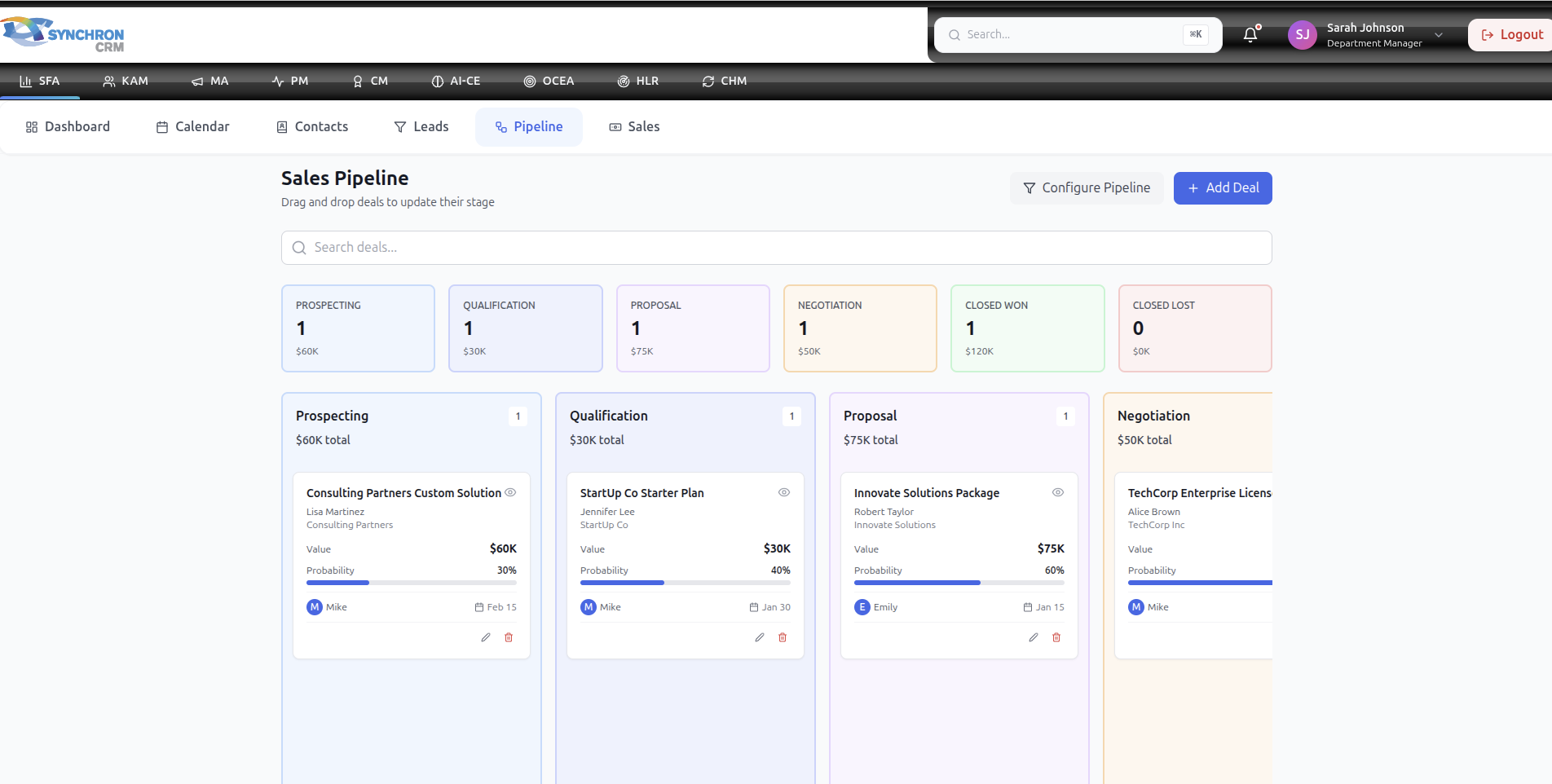
1. What is the Sales Pipeline?
A Sales Pipeline is a structured representation of all active opportunities organized by stage.
Each stage reflects the progress of a deal in the sales process.
The pipeline answers critical questions:
- How many deals are in progress?
- What is the expected revenue?
- Which deals are likely to close?
- Where are deals getting stuck?
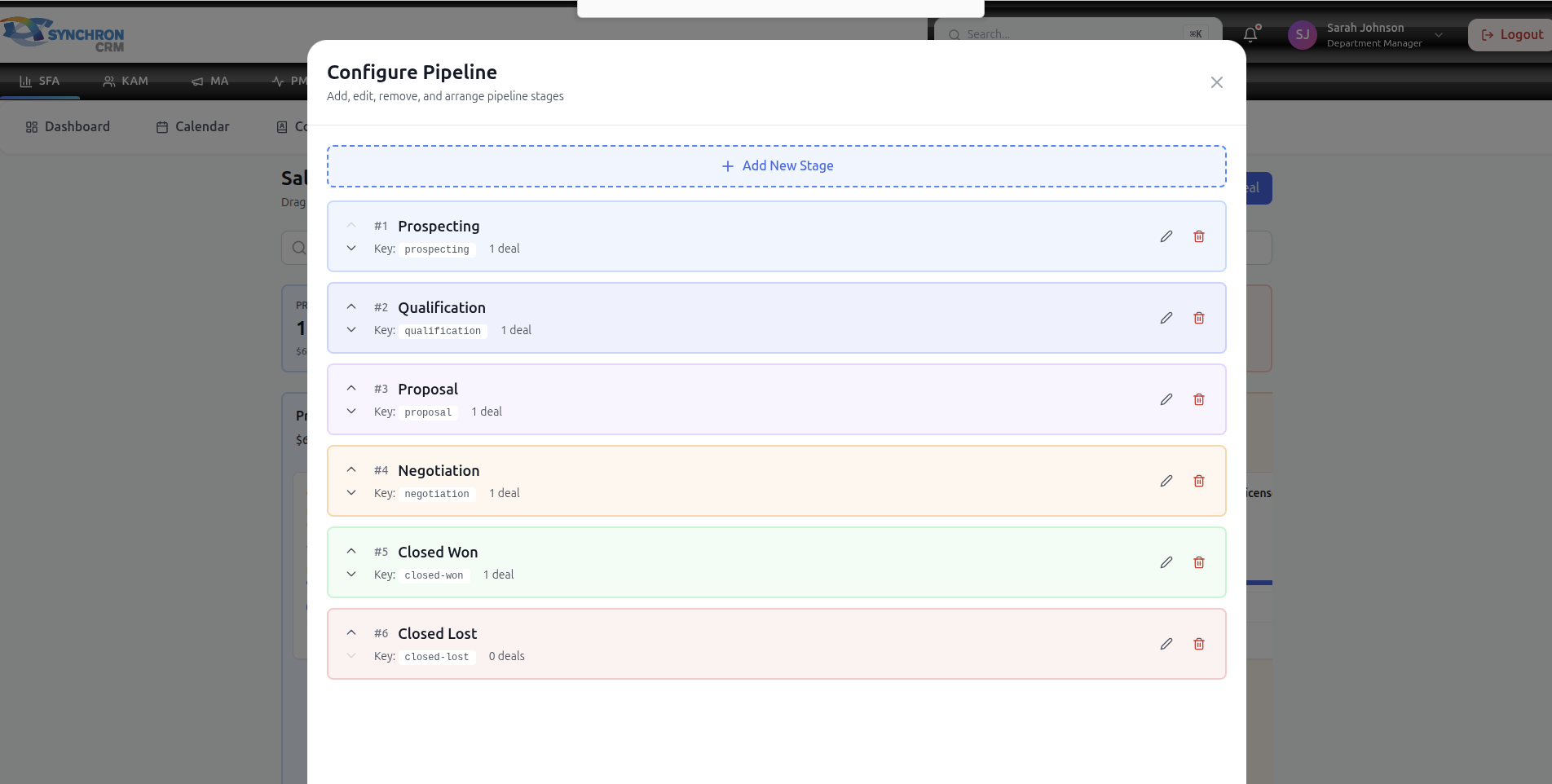
2. Pipeline Stages
Typical stages include:
- Initial Contact
- Qualification
- Proposal Sent
- Negotiation
- Closed Won
- Closed Lost
3. Stage Definitions
3.1 Initial Contact
The opportunity has been created and first contact has been established.
Required Actions:
- Confirm interest
- Validate business need
- Record interaction notes
3.2 Qualification
The opportunity meets predefined qualification criteria.
Qualification criteria may include:
- Budget confirmed
- Authority identified
- Need validated
- Timeline defined
Only properly qualified deals should proceed to proposal stage.
3.3 Proposal Sent
A formal offer or quotation has been delivered.
Best Practices:
- Attach proposal file in CRM
- Confirm client received proposal
- Schedule follow-up call
- Record estimated deal value
3.4 Negotiation
Client and sales rep are discussing terms, pricing, or scope.
Focus Areas:
- Address objections
- Clarify requirements
- Maintain strong communication
- Update probability of closing
Deals should not remain long in this stage without action.
3.5 Closed Won
The deal has been successfully completed.
Required Actions:
- Confirm signed agreement
- Record final contract value
- Move to Sales module
- Notify finance/operations if needed
3.6 Closed Lost
The deal did not convert.
Mandatory:
- Record lost reason
- Capture competitor information (if known)
- Document learning insights
This data helps improve strategy.
4. Opportunity Details
Each pipeline record should include:
- Company Name
- Contact Person
- Estimated Deal Value
- Expected Close Date
- Assigned Sales Rep
- Probability of Closing
- Notes & Attachments
Complete records ensure accurate forecasting.
5. Probability Management
Each stage may have an associated closing probability.
Example:
- Initial Contact → 20%
- Qualification → 40%
- Proposal Sent → 60%
- Negotiation → 80%
Weighted Forecast Formula:
Weighted Revenue = Deal Value × Probability
This helps managers calculate realistic revenue forecasts.
6. Pipeline Health Indicators
A healthy pipeline should have:
✔ Balanced number of deals across stages
✔ Consistent movement forward
✔ No long-stalled opportunities
✔ Accurate expected close dates
7. Identifying Stalled Deals
A deal may be stalled if:
- No activity for more than 14 days
- No follow-up scheduled
- Repeated rescheduling
- No client response
Action Required:
- Re-engage client
- Escalate if necessary
- Consider closing as lost if inactive
8. Forecasting Revenue
Pipeline data allows:
- Monthly revenue forecasting
- Target comparison
- Capacity planning
- Resource allocation
Managers should review:
- Total pipeline value
- Weighted pipeline value
- Close date distribution
- Stage distribution
9. Daily Workflow for Sales Reps
Recommended routine:
- Review pipeline every morning
- Focus on Negotiation and Proposal stages
- Update expected close dates
- Record every interaction
- Move deals forward promptly
10. Manager Responsibilities
Managers should:
- Monitor stage distribution
- Identify bottlenecks
- Review probability accuracy
- Coach reps on stalled deals
- Ensure forecasting accuracy
11. Common Pipeline Mistakes
❌ Keeping unqualified deals in pipeline
❌ Inflating deal value
❌ Overestimating close probability
❌ Ignoring expected close dates
❌ Failing to record lost reasons
12. Best Practices
✔ Move deals only when criteria are met
✔ Keep expected close dates realistic
✔ Update probabilities honestly
✔ Remove inactive deals
✔ Review pipeline weekly with manager
13. Pipeline Governance
Organizations should define:
- Standard stage definitions
- Qualification rules
- Maximum allowed time per stage
- Mandatory fields before stage change
- Review cadence (weekly/monthly)
Governance ensures consistent reporting across teams.
14. Relationship Between Leads and Pipeline
Process flow:
Lead → Qualified → Converted to Opportunity → Pipeline → Closed Won/Lost
Leads are prospects.
Pipeline contains revenue opportunities.
15. Summary
Pipeline Management is the core of revenue generation.
Proper pipeline discipline leads to:
- Accurate forecasts
- Higher close rates
- Shorter sales cycles
- Stronger team accountability
Treat your pipeline as your future revenue engine.